When Charging Is Instant: Graphene and the Rise of Supercapacitors
There is a quiet assumption built into modern life: charging takes time.
Phones sit tethered to outlets. Electric vehicles remain parked for hours. Backup systems require advance preparation. Even in advanced defense systems, power delivery is often constrained by the physics of battery chemistry.
But what if charging were nearly instantaneous?
What if energy systems could absorb and release power in seconds — not hours — without degrading after a few hundred cycles?
That is the promise of supercapacitors. And graphene may be the material that finally pushes them from niche technology to strategic infrastructure.
Batteries Store Energy. Supercapacitors Deliver It.
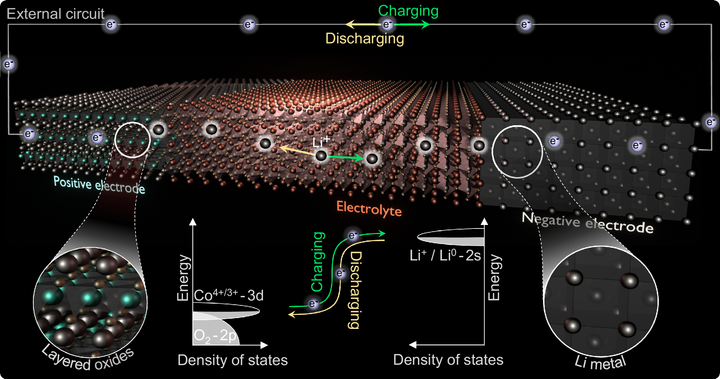
Traditional lithium-ion batteries store energy through chemical reactions. That chemistry enables high energy density — but it comes with tradeoffs:
- Slow charge times
- Degradation over repeated cycles
- Thermal instability risks
- Limited burst power delivery
Supercapacitors work differently.
Instead of relying on chemical reactions, they store energy electrostatically at the surface of materials. That allows them to:
- Charge in seconds
- Discharge extremely quickly
- Survive hundreds of thousands of cycles
- Operate with higher safety margins
The tradeoff historically? Lower energy density.
That’s where graphene enters the equation.
Why Graphene Changes the Math
Supercapacitors depend heavily on surface area and electrical conductivity. The more surface area available for charge storage — and the faster electrons can move — the better the performance.
Graphene excels at both.
A single layer of carbon atoms arranged in a hexagonal lattice, graphene offers:
- Exceptional electrical conductivity
- Extremely high surface area per gram
- Mechanical strength and flexibility
- Chemical stability
In theory, graphene-based electrodes can dramatically increase capacitance while maintaining ultra-fast charge and discharge rates.
In practice, research over the past decade has shown that graphene-enhanced supercapacitors can:
- Deliver higher power density
- Improve cycle life
- Reduce internal resistance
- Enable flexible and lightweight configurations
The challenge is no longer proof-of-concept. It is manufacturing at scale with consistent material quality.
Where Instant Charging Actually Matters
Supercapacitors are unlikely to replace batteries entirely. Instead, they may redefine how hybrid energy systems are designed.
Defense & Tactical Systems
Modern defense systems require rapid bursts of power — radar pulses, directed energy systems, communications arrays, autonomous platforms.
Supercapacitors provide:
- Immediate power release
- High cycle durability
- Reduced thermal risk
In high-tempo operational environments, that resilience matters.
Electric Vehicles
Graphene-enhanced supercapacitors could:
- Absorb regenerative braking energy more efficiently
- Provide acceleration bursts
- Reduce strain on lithium-ion batteries
- Extend overall battery life
Hybrid battery–supercapacitor architectures are already being explored to combine energy density with rapid power delivery.
Grid & Renewable Integration
Renewables are intermittent by nature. Grid systems require:
- Rapid stabilization
- Instantaneous response to fluctuations
- High-cycle durability
Supercapacitors excel in frequency regulation and short-duration load balancing — areas where batteries can degrade quickly.
The Manufacturing Reality
The biggest barrier to graphene supercapacitors is not theory. It is consistency.
For high-power systems — especially defense and grid infrastructure — performance variability is unacceptable.
Uniform graphene quality, scalable production methods, electrode integration techniques, and cost reduction remain the key hurdles.
The nations and companies that solve scalable graphene production will not simply improve supercapacitors — they will redefine energy system architecture.
Beyond Faster Charging
The real shift is conceptual.
Batteries were designed around storage duration.
Supercapacitors are designed around power immediacy.
Graphene makes it possible to rethink how those systems work together.
Imagine infrastructure where:
- Vehicles charge in minutes, not hours
- Tactical systems never wait for recharge cycles
- Grid stability is maintained without chemical degradation
- Energy systems are designed for speed, not delay
Instant charging is not just convenience.
It is strategic capability.
The Broader Strategic Question
As global competition intensifies around advanced materials and energy storage, graphene’s role in supercapacitors is not just a laboratory curiosity.
It is a potential inflection point.
The question is no longer whether graphene can enhance supercapacitors.
The question is who will scale it — and who will control the supply chains behind it.
In a world where energy speed equals operational advantage, the material that enables instant charging may quietly shape the next generation of power systems.