Graphene Coatings and the War on Degradation
There is a quiet war being fought across the physical world, one that rarely makes headlines but carries an enormous economic cost.
It is not fought with weapons, but with time.
Corrosion, degradation and material fatigue steadily erode ships, bridges, pipelines and critical infrastructure. In the United States alone, the cost of corrosion is estimated to exceed $2.5 trillion annually when accounting for maintenance, replacement and operational inefficiencies. Globally, the figure is far higher.
For decades, the response has been largely reactive. Inspect. Repair. Repaint. Repeat.
A different approach is beginning to take hold, one that shifts the focus from maintenance to prevention. At the centre of that shift is graphene.
The limits of traditional coatings
Modern coating systems are, in many respects, a compromise. They are designed to slow degradation rather than prevent it.
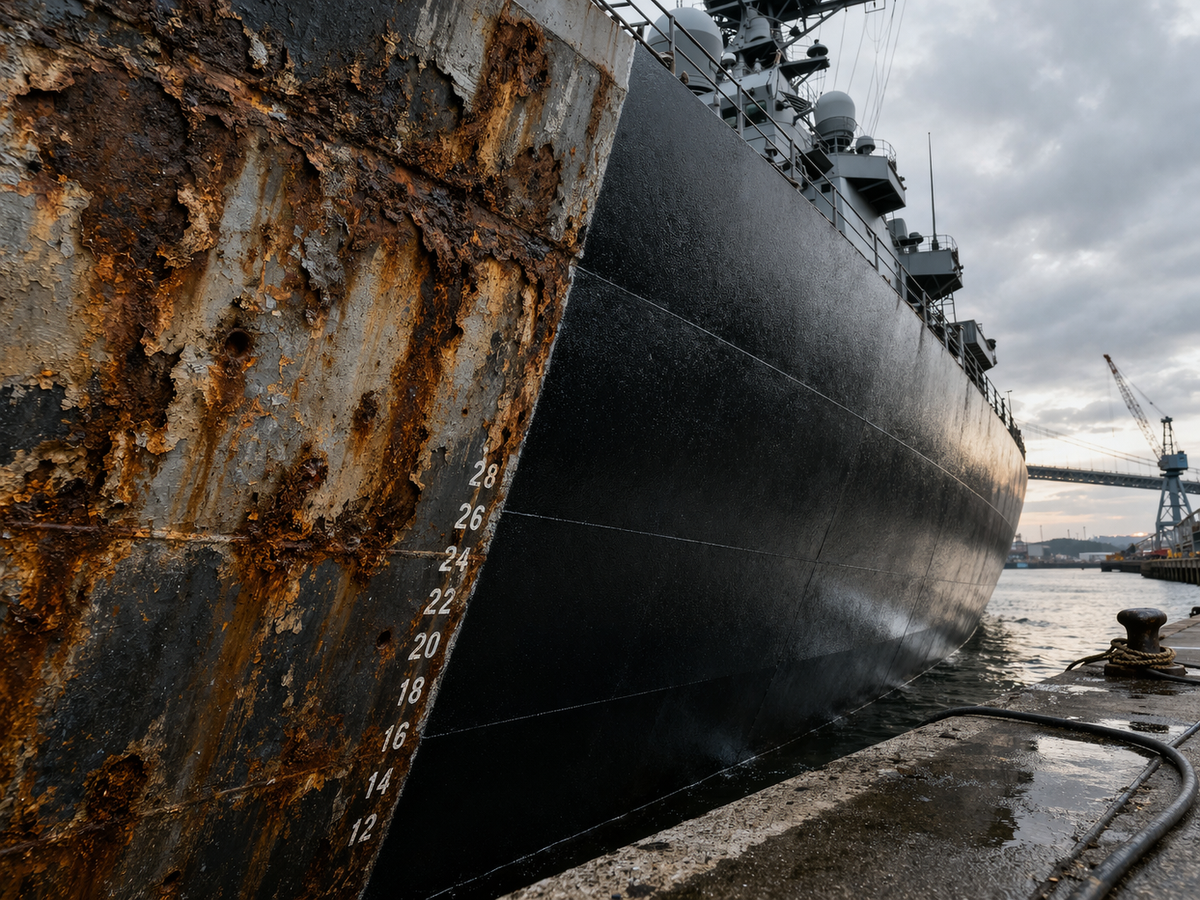
Even high-performance coatings degrade under prolonged exposure to saltwater, ultraviolet radiation and thermal cycling. Over time they crack, wear and allow moisture and oxygen to penetrate the surface beneath.
In maritime environments this leads to increased drag, higher fuel consumption and more frequent maintenance cycles. In infrastructure it results in shortened asset lifespans, rising costs and, in some cases, safety risks that emerge only after years of unnoticed decline.
The problem is not a lack of effort. It is a limitation of the materials themselves.
Why graphene changes the equation
Graphene represents a departure from incremental improvement. It is not simply another additive layered onto existing systems. It introduces a fundamentally different set of properties.
It is exceptionally strong, highly conductive and chemically stable. Most importantly, it is nearly impermeable at the molecular level.
When incorporated into coating systems, graphene creates a barrier that is both mechanically resilient and chemically resistant in ways traditional materials cannot achieve. The result is not just a longer-lasting coating, but a different performance profile altogether.
Water, oxygen and corrosive ions are far less able to penetrate the surface. The coating is more resistant to cracking and abrasion. In maritime applications, smoother and more stable surfaces can reduce drag, translating into measurable gains in efficiency.
What was once a temporary protective layer begins to resemble something closer to a structural enhancement.
From maintenance to performance
In defence applications, coatings are not merely protective. They are functional.
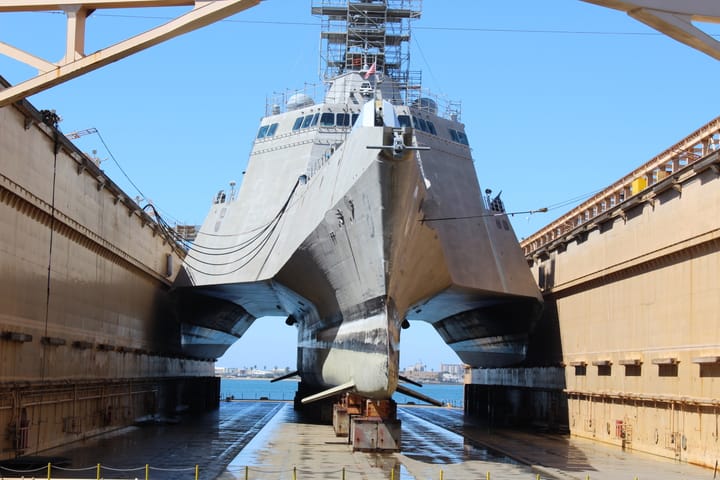
Naval vessels and maritime systems operate in conditions that place continuous stress on materials. Maintenance cycles are costly, but more importantly, they reduce operational availability.
Graphene-enhanced coatings offer the possibility of extending those cycles while improving performance at the same time. Reduced drag lowers fuel consumption. Greater durability reduces downtime. The ability to integrate additional functionalities, such as electromagnetic interference shielding or thermal management, opens further possibilities.
In this context, coatings move from being a maintenance consideration to a performance variable.
Infrastructure as a durability problem
The same logic applies to infrastructure, where the conversation is often framed in terms of funding rather than material performance.
Bridges, ports and pipelines are typically designed with an understanding that degradation is inevitable. Maintenance is budgeted accordingly. Replacement is deferred as long as possible.
Yet this model assumes that materials cannot do much more than they currently do.
Graphene challenges that assumption. By extending the lifespan of protective systems and reducing the rate of degradation, it offers a way to rethink lifecycle costs altogether. Fewer interventions, longer service intervals and greater reliability begin to shift the economics of infrastructure in a meaningful way.
In sectors where failure carries both economic and strategic consequences, durability becomes more than a cost issue. It becomes a matter of resilience.
The constraint is no longer the science
The scientific case for graphene has been established for some time. The remaining challenges are more practical.
Production must be scaled. Quality must be consistent. Integration into existing manufacturing and coating processes must be seamless enough to justify adoption.
These are not trivial hurdles, but they are industrial rather than theoretical. As they are overcome, the question shifts from whether graphene can improve coating systems to how quickly those improvements can be deployed.
Coatings, in this sense, represent one of the more immediate pathways to adoption. They fit within existing workflows and address well-understood problems with clear economic consequences.
A material that changes timelines
Infrastructure and defence systems are not replaced frequently. They are expected to endure.
For that reason, small improvements in durability can have outsized effects over time. Extending maintenance cycles by even a modest margin can translate into significant cost savings and increased availability across fleets and networks.
Graphene does not replace steel, concrete or composites. It alters how long they can perform as intended.
In a world where degradation has long been treated as inevitable, the ability to meaningfully slow it may prove to be one of the more consequential developments in applied materials.
Not because it is dramatic, but because it is cumulative.
And in infrastructure, as in defence, cumulative advantages tend to decide outcomes.