From Lab to Field
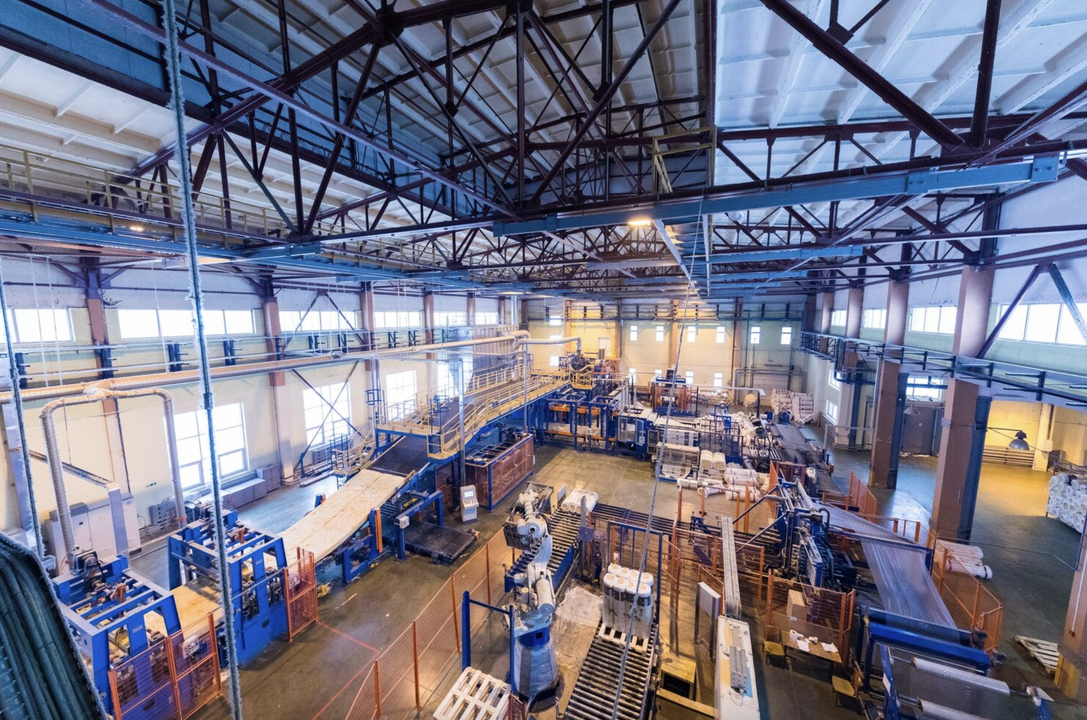
Why Execution, Not Discovery, Will Determine Graphene’s Winners
Special Report | Research & Translation
Graphene is no longer constrained by scientific understanding. Its fundamental properties—mechanical strength, electrical conductivity, thermal performance, and chemical stability—have been validated across thousands of peer-reviewed studies. The bottleneck facing graphene today is not discovery.
It is translation.
The gap between laboratory performance and field deployment has become the defining challenge in graphene’s evolution. As the material moves from academic novelty to industrial input, success is increasingly determined by who can execute—at scale, with consistency, and under real-world conditions.
This shift marks a critical inflection point. Research remains essential, but it is no longer sufficient. The next phase of graphene’s development belongs to those who can bridge the divide between experiment and infrastructure.
The Maturity of Graphene Research
Graphene research has reached a level of maturity rarely acknowledged in public discourse.
The basic physics are well understood. Production pathways—chemical vapor deposition, exfoliation, reduction, and hybrid approaches—have been explored extensively. Performance envelopes across electrical, thermal, and mechanical domains are documented.
What remains uncertain is not whether graphene works, but how reliably it can be made to work outside controlled environments.
This distinction matters. In industrial systems, peak performance is less valuable than repeatable performance. A material that performs exceptionally once but inconsistently thereafter fails qualification, regardless of its theoretical advantages.
Research has done its job. Translation must now take the lead.
Why Translation Is Harder Than Discovery
The translation problem in graphene is structural, not intellectual.
Laboratory research optimizes for:
- controlled conditions
- small batch sizes
- isolated variables
- publication metrics
Industrial deployment optimizes for:
- scale
- variability tolerance
- integration with existing systems
- long-term reliability
The transition between these worlds is nontrivial. Properties demonstrated at the micron scale do not always survive manufacturing variability, environmental exposure, or mechanical stress. Small deviations in production method can produce large differences in performance.
Graphene’s sensitivity to process control makes this challenge especially acute.
Manufacturing as Applied Research
In graphene, manufacturing is not downstream of research. It is research.
Production methods directly influence layer count, defect density, surface chemistry, and dispersion behavior. These factors, in turn, determine whether graphene enhances or undermines system performance.
As a result, the most consequential advances in graphene today are happening not in journals, but on production floors and pilot lines. Process refinement, quality control, and formulation discipline increasingly define competitive advantage.
This reality reshapes how research should be evaluated. Breakthroughs that cannot be manufactured consistently are incomplete. Execution capability has become the new measure of scientific relevance.
Integration: Where Most Breakthroughs Fail
Even when graphene can be produced reliably, integration remains a formidable barrier.
Industrial systems are not blank slates. They are complex assemblies of materials, tolerances, and legacy constraints. Introducing graphene requires compatibility with existing chemistries, fabrication methods, and regulatory frameworks.
This is where many promising applications stall.
Graphene that performs well as a standalone material may fail when embedded into coatings, composites, or electronic systems. Interfaces matter. So do adhesion, dispersion, and long-term stability.
Successful translation therefore requires systems thinking—an understanding of how graphene behaves not in isolation, but as part of a larger whole.
Qualification as the Research Endgame
In sectors such as defense, energy, and nuclear, qualification is the ultimate test of translation.
Qualification processes are expensive, time-consuming, and conservative by design. They demand extensive testing under real-world conditions and leave little room for ambiguity. Materials either meet requirements, or they do not.
For graphene, qualification represents both a challenge and an opportunity.
The cost and complexity of qualification discourage casual entrants and compress competition. Once qualified, materials are rarely displaced. Early success therefore creates durable moats and long-term relevance.
In this context, research aimed at qualification—not just performance—becomes strategically decisive.
The Emergence of Translation-First Teams
A notable shift is underway in the graphene ecosystem.
The most effective teams increasingly combine:
- materials science
- manufacturing engineering
- systems integration
- application-specific expertise
These groups treat translation as a first-order problem, not an afterthought. Research questions are framed around deployability from the outset. Manufacturing constraints inform experimental design. Qualification requirements guide material development.
This approach does not diminish scientific rigor. It channels it.
As graphene matures, translation-first organizations are separating themselves from research-only efforts.
Policy, Funding, and the Translation Gap
Public funding has historically favored discovery over deployment. While this has produced a rich research base, it has also widened the translation gap.
Recently, policy priorities have begun to shift. Governments increasingly recognize that advanced materials competitiveness depends on manufacturing and integration, not just publication output. Programs supporting pilot production, scale-up, and qualification reflect this change.
For graphene, this alignment is consequential. Translation-focused research benefits disproportionately from sustained, mission-aligned funding and long-term policy support.
Time Horizon: The Execution Phase
Graphene has entered its execution phase.
Over the next decade, the defining advances will not be new physical principles, but new standards of reliability, consistency, and integration. Research that accelerates these outcomes will shape graphene’s industrial footprint.
This does not diminish the role of academia. It reframes it. The most impactful research will increasingly be that which bridges the lab-field divide.
Where Value Will Accrue
Value in the graphene ecosystem will accrue to those who can translate knowledge into systems.
This includes:
- organizations that control production quality
- teams that understand qualification pathways
- researchers embedded in deployment contexts
Intellectual novelty alone will not determine success. Execution capability will.
Conclusion: Research That Endures
Graphene’s scientific foundation is secure. Its future now depends on how effectively that foundation is translated into the world.
The next chapter of graphene research will be written not only in laboratories, but in factories, test facilities, and operational systems. Those who understand this shift will define graphene’s role in industry, infrastructure, and national capability.
Discovery made graphene possible.
Execution will make it permanent.